Archive for Six Sigma
U.S. manufacturing – Competing in a Value Driven World
Posted by: | CommentsThis is a Guest blog Post by Dr. Eric Reidenbach, the Director of the Six Sigma Marketing Institute. I think Dr. Reidenbach’s thoughts are right on target. We keep basing Continuous Improvement efforts in areas that are making little difference to the bottom line. Most manufacturers constraints are in the marketplace and till we address and solve the issue of demand, improvement in operations mean very little.
Dr. Reidenbach’s Message:
Production is driven by consumption. Manufacturers will not add new shifts or open new plants unless there is consumption – demand. It really is that simple. No amount of targeted tax breaks, free trade zones, industrial policy, lean initiatives will create the demand necessary to drive production and employment. These are factors that operate on the production side of the equation, not the consumption side.
What will drive production is giving buyers a compelling reason to buy. That compelling reason to buy is value – superior value. Value is the interaction of quality and price. High quality products and services offered at a competitive and fair price are the drivers of value. Every undergraduate econ student that is paying attention in class knows that value is the lubricant that facilitates exchanges. The buyer seeks high quality at a fair price (value) while the producer seeks payment (value).
Recessions are often referred to as conditions of excess inventory that requiring an adjustment. The buyer is telling manufacturers that the value offered in the proposed exchange is not sufficient to complete the exchange. Until the producer understands value and its catalyzing effect, exchanges will be stultified.
There is a growing emphasis on retraining our manufacturing sector. Until this retraining includes education regarding the identification, creation and delivery of value, we will be doing the same thing over and over but expecting different results. NAM (National Association of Manufacturing), state manufacturing associations, AME (Association of manufacturing Excellence) all have a role to play here.
Most manufacturers tend to be product focused. They believe that quality and value are a function of the product and product features. They ignore all of the other elements of the value delivery system such as product support, parts availability, technical support, and distribution – all of the elements that make it “easy to do business with”. This is what I call “value myopia” and it severely limits and restricts a manufacturer’s capacity to penetrate markets, domestic and global. They need to refocus on value – become value focused.
Manufacturers are also consumers. They purchase goods and services in their daily lives as well as their business lives. Do they buy automobiles solely on the basis of product features (blue tooth, gps, xm radio) or do they factor into their decision elements such as dealer service, repairs (timeliness of repairs, quality of repairs), availability to get the right parts, the ability to talk with someone at the dealership who knows, someone who tells them the truth, someone who does not talk down to a woman, warranty, cleanliness of the dealership, etc.
My bet is that they do. If they don’t they have to deal with their wives who are often saddled with the job of taking the car to the dealership for service and repairs. Why is it that while they recognize these elements as part of the value package, they don’t take this lesson back to their own operations? Is it because they are so focused on their definitions of quality and value? These are too often words that are abstractions that, in reality, have no meaning when they are divorced from the markets they serve. Quality and value, absent their linkage to the market become nothing more that “conformance” to specs that if the manufacturer is lucky correspond to actual buyer demands.
Many manufacturers are products of engineering programs. I did a search of a number of prominent engineering programs and found no mention of customers, value or markets. I did find a lot about typical engineering subjects such as calculus, trig, aerodynamics, etc. – things you would expect to see in engineering programs. However, the world has changed significantly since many engineering curricula were developed. Buyers are smarter and competition is greater and stronger. The question is – Will U.S. manufacturers have what it takes to compete in this new world? Will they become the superior value providers that dominate global markets? They won’t unless something changes.
Related Information:
Best in Market eBook
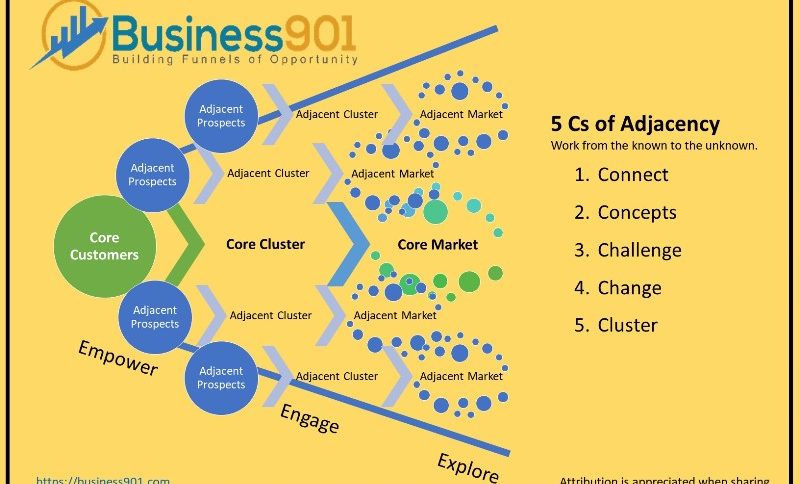
Six Sigma Marketing Institute has just released (for a limited time at no cost) a Customer Value Assessment Program which can obtained at http://DrivingMarketShare.com. The program enables an organization to evaluate their organization based on Customer Identification, Customer Value, Customer Acquisition, Customer Retention and Customer Monitoring. This assessment will expose your weaknesses and strengths in each of the 5 Cs of Driving Market Share.
Related Posts:
Six Sigma Discipline is Good for a Creative Process
Six Sigma a great companion to marketing
The Eagles always understood!
Six Sigma Discipline is Good for a Creative Process
Posted by: | CommentsI have been promoting Lean Marketing and Six Sigma Marketing for quite a while and have typically been met with steadfast resistance. However, I am seeing more and more mentions of this and it is not coming from the Six Sigma Black Belts. It is being driven by Marketers and Accountants. Listen to one marketer’s view below. 
Why a Little Discipline Is Good for the Creative Process by Avi Dan the is CEO of Avidan Strategies. It was published in June, 2010 on Advertising Age.
In the article Avi Dan points out:
Companies that implement a methodical process, such as Procter & Gamble or Microsoft, tend to deliver consistently better communications and business results, and their brands enjoy greater value. They tend to beat competitors on such key attributes as “cycle time” and “speed to market,” and have a higher degree of success when it comes to new-product launches. Most important, a meticulously executed process can deliver savings of more than 30% and improve productivity, as the need for redirects and errors is minimized.
These people believe that creative organizations are often built on the principle of trial and error, and the rigorous confinement to the norm is too stifling. Yet others believe that a disciplined process is essential to optimize the client-agency relationship. I tend to agree with the latter view. Marketing spend is the No. 1 investment for most companies — more even than IT or training. It behooves CMOs to install a precise process to insure that creative development is as effective and efficient as it can be. Yet I believe that while CMOs should adopt the spirit and attitude of Six Sigma, it should be applied with a light hand.
He listed suggestions on how to apply discipline to the creative process with good explanations of each. A list of them follows:
- Call it Three Sigma.
- Prioritize accuracy.
- Move fast.
- Avoid the iterative process.
- Integrate effectively.
- Get involved early.
- Engage senior executives.
- Speed up cycle time.
- Codify standards.
- Improve continuously.
- Measure ROI.
His suggestion on how to implement
So do what agencies often do with controversial products, or when a client faces a PR nightmare: rebrand. Rebranding it as a more user-friendly process, emphasizing areas that are important to the agency, like better briefs and improved, faster client buy-in, will make for a more pleasing reception when implementing Three Sigma.
I encourage you to read the article, Why a Little Discipline Is Good for the Creative Process and the reactions to it. There is another take on this article from a Kellogg School of Business faculty member, Gad Allon. He titled his blog post Lean Advertising.
Lean and Six Sigma Marketers step forward and start Driving Market Share! Most practitioners of these practices or any other continuous improvement philosophy seldom see the opportunity that exists for them. They just can’t get away from the operational side of things. I hate to say this but I have more hope in the area of Marketing and Accounting to see this bigger picture.
Maybe you’re a Black Belt, Sensei or a Jonah. You have completed projects that saved the company money, improved flow and increased quality. You have done it extremely well but in today’s market place it means little. Fact of the matter; if you are not competitively priced, can’t deliver product and have good quality, you are simply not in business. If you are still talking that game you are out of touch because the problems and constraints are not internal for 90% of the companies. It is external; it is a sales/market constraint.
What stops a Continuous Improvement Practitioner from jumping into marketing?
- The first barrier is that you put your foot in your mouth the first time you talk to marketing or management. The words that come out of your mouth are getting rid of waste, reducing cost, standardize, data collection, reports, measures and audits.
- The next step is that you start talking about culture change and journeys. You might tell sales not to be so number driven (by the way we need data from you to make this all work).
- If you do get your foot in the door, you bring out your toolbox and start trying to quantify, reduce variability and my favorite is bringing the control point to manage this inside the company.
I could go on but the culture and internal part of all this is wrong! Sales and marketing are external functions and if you want to play the game you need to get on their side of the fence.
- Your first step is to consider how to increase revenue and drive market share. There is not anything that will perk up the ears of management, sales or the CMO.
- Don’t talk about culture, talk about how you can increase a salespersons face time with customers through creating an effective and efficient marketing effort.
- Don’t bring out your toolbox. There is ample time for that but truth be known, till you have learned about sales and marketing your toolbox probably won’t work. It works internally developing a call center or an identified problem later on but initially you will bog down the process and loose support.
Promotional Copy: Eric Reidenbach of Six Sigma Marketing Institute has created that bridge between marketing and the Continuous Improvement Practitioner through the development of a new program called the 5Cs of Driving Market Share. It enable the CI Practitioner the necessary marketing knowledge and basic toolset that will provide a path for your organization or if you are a consultant, a client’s organization. On the other side of the bridge, it provides the CMO the necessary knowledge to understand a modified DMAIC approach to marketing and provide real meaning to his data and a way to use it to drive market share.
Related Posts:
Six Sigma a great companion to marketing
Use Intuition or Six Sigma for your Marketing Data?
Could a CMO increase their tenure by using Six Sigma?
Made to Stick: Why Some Ideas Survive and Others Die
Six Sigma a great companion to marketing
Posted by: | CommentsReceived an excellent response on my post yesterday (Measuring The Customer Experience) on Twitter from a @pricingright that said; “With all due respect, it is far too simplistic to use customer advocacy as a measure of customer experience & it is wrong to draw causations. Correlations they speak about are from cross-sectional studies. Interesting but rife with selection, survivorship and other bias.”
I posted the Forrester video because I felt the point being made about keeping measurements simple were important. What needs to be simplistic in measurement is the collection of data. Without simplicity or automation in handling these tasks seldom will they be sustained or not manipulated to get the numbers in!
Do I believe that Customer Advocacy is to simplistic as @pricingright points out? You Betcha! I am from the school of Six Sigma, we don’t make anything that simple do we? ;) In the soon to be released 5 Cs of Driving Market Share program, I had asked Eric Reidenbach, the founder of Six Sigma Marketing Institute what the Net Promoter Score meant to him. An excerpt from an article he sent me.
What drives the NPS calculation? What is the best predictor of whether a customer is willing to recommend it to a friend? Let’s start with what does not predict NPS.
Most organizations would point out that they do some kind of customer satisfaction work. However, Reichhold correctly points out that “most customer satisfaction surveys aren’t very useful…. Their results don’t correlate tightly with profits or growth…Our research indicates that satisfaction lacks a consistently demonstrable connection to actual customer behavior (recommendation) and growth. ..In general, it is difficult to discern a strong correlation between high customer satisfaction scores and outstanding sales growth.”
What does correlate highly with profitability and sales is loyalty which Reichhold defines as “the willingness of someone – a customer, an employee, a friend to make an investment or personal sacrifice in order to strengthen a relationship. For a customer, that can mean sticking with a supplier who treats him well and gives him good value in the long term even if the supplier does not offer the best price in a particular transaction.”
Value, like the NPS, is specific to a product/market. The factors that define value for a credit card will be different than those factors that define value for mortgages. Similarly, farmers will define value differently when talking about tractors than will golf course maintenance personnel. Value, the best predictor of loyalty and NPS, will vary from product/market to product/market and accordingly, must be managed differently from one product/market to another.
Value is conceptually defined as the relationship between a product’s quality and the price paid for the product. Our research also indicates that the brand and/or corporate image may play a significant role in the value definition.
Simplicity is important to measurement. It is imperative that we make the collection of data to include asking the right questions of the right people to get meaningful data. Numbers can be crunched! Customer Advocacy measurements can be a great tool used properly and/or in context with product/market classifications. Creating the correct data sets and manipulating these numbers is what makes Six Sigma such a great companion to marketing.
Disclaimer: At the present time, I am working on a project with Six Sigma Marketing Institute
Related Posts:
Evaluating your Marketing Funnel, Only Seven Levers matter
Determining your Customer Perspective – Who do you want?
Determining your Customer Perspective – Can you satisfy these customer segments?
The Eagles always understood!
Measuring The Customer Experience
Posted by: | CommentsEven Forrester Research keeps their measurements simple.
Forrester Research, Inc. (Nasdaq: FORR) is an independent technology and market research company that provides pragmatic and forward-thinking advice to global leaders in business and technology. For more than 24 years, Forrester has been making leaders successful every day through its proprietary research, consulting, events, and peer-to-peer executive programs. Learn more at www.forrester.com
Related Posts:
Marketing Effectiveness
Overcoming Resistance and Backsliding
Use Intuition or Six Sigma for your Marketing Data?