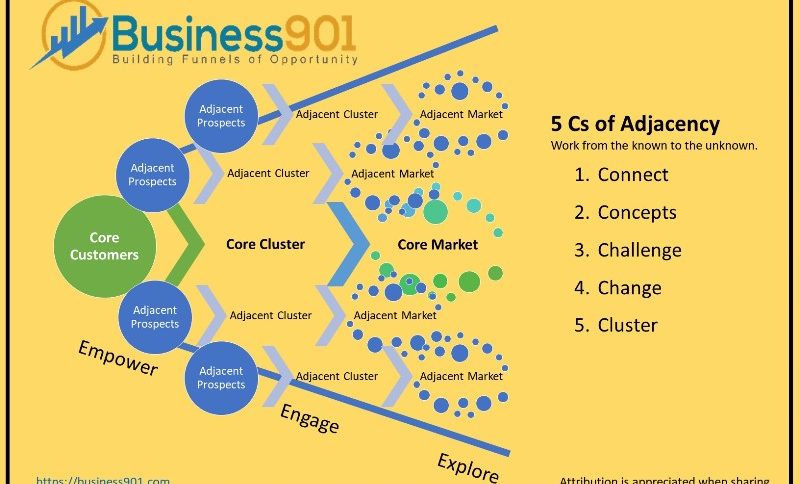
5 Cs of Driving Market Share – Coming Soon!

Archive for Theory-of-Constraints

This is a transcription of a podcast with Bill Dettmer, Senior Partner of Goal Systems International. Bill is the author of The Logical Thinking Process: A Systems Approach to Complex Problem Solving ) and Strategic Navigation: A Systems Approach to Business Strategy, two books around which Goal Systems International’s internationally renowned Thinking Process Course is based. An excerpt form the book.

Joe:  One of the things that ? and this is going to be my Six Sigma side coming out. Don’t you have to support all this with data? You can’t be intuitive about everything because sometimes just the outward appearance of something lies to you if you don’t have the supporting data.

Bill:  Yes, you’re absolutely right. Where does the data become most important? The data is most important in the identification of the problem. It’s not in the creation of the solution because that’s a projection of what should happen in the future. It’s not in the establishment of the goal and the necessary conditions because those are value judgments. But, when you start to analyze what the problem is, in other words when you’re building the current reality tree, that’s where data become really important. One of the key lessons I try to convey in my thinking process courses is the most critical of all of the categories of legitimate reservation is entity existence.


Systemizing your Approach to Management with Bill Dettmer

Related Podcast: Systemizing your approach to management, Podcast with Bill Dettmer

Related Posts:
Bootstrapping business Survival
Businesses that Die, Die of confusion
Theory of Constraints Roundup
Starting with the TOC Thinking Process

Thinking Process and System Thinking in Management eBook

Dr. Charlene Spoede Budd was my guest on the Busienss901 Podcast and as you would expect our discussion was about the Theory of Constraints Through-put Accounting methods and the application of the knowledge that we gain from this information. We discussed the use of accounting throughout the organization for developing predictive measures versus reactive. This is not your regular accounting discussion. 

Dr. Budd was a contributor to the recent Theory of Constraints Handbook on two separate subjects:

  1. Traditional Measures in Finance and Accounting, Problems, Literature Review, and TOC Measures (Chapter 13 of Theory of Constraints Handbook)
  2. A Critical Chain Project Management Primer (Chapter 3 of Theory of Constraints Handbook)


Powered by Podbean.com

Charlene Spoede Budd is a Professor Emeritus from Baylor University, where she taught management accounting and project management classes for a number of years. She is certified in all areas of the Theory of Constraints and is the Chair of the Finance and Metrics Committee of the Theory of Constraints International Certification Organization. Her research has been published primarily in practitioner journals and she has been awarded three Certificates of Merit for articles published in Strategic Finance. Dr. Budd has co-authored two accounting textbooks with her most recent book, A Practical Guide to Earned Value Project Management.

The subject matter may seem a tad dry but give this podcast a chance, I do not think you will be disappointed!

Related Posts:
Six Sigma a great companion to marketing
Use Intuition or Six Sigma for your Marketing Data?
Theory of Constraints Roundup

Comments (0)

So to survive, you must prevent confusion? Bill Dettmer of Goal Systems International, Theory of Constraints Expert and upcoming podcast guest recommended a book to me about Systems Thinking. It was Deep Survival: Who Lives, Who Dies, and Why by Laurence Gonzales. At the time it sounded like an odd recommendation but Bill was “spot on” about the book. Confusion It caused me more reflection than any book has in years. One of the particular areas that Laurence described in the book is this state of confusion or of being lost. He said:

Research suggests five general stages in the process of person goes through when lost.

  1. In the first, you deny that you disorientated and press on with growing urgency, attempting to make your mental map fit what you see.
  2. In the next stage as you realize that you genuinely lost, the urgency blossoms into a full scale survival emergency. Clear thought becomes impossible and action because frankly, unproductive, even dangerous.
  3. In the third stage (usually following injury or exhaustion), you expend the chemicals of emotion and form a strategy for finding some place that matches the mental map. (It is a misguided strategy, for there is no such place now: you are lost.)
  4. In the fourth stage, you deteriorate both rationally and emotionally, as a strategy falls to resolve the conflict.
  5. In the final stage, as you run out of options and energy, you must become resigned to your plight. Like it or not you must make a new mental map of where you are. You must become Robertson Crusoe or you will die. To survive, you must find yourself. Then it won’t matter where you are.

Psychologists who study the behavior of people, who get lost, report that very few ever backtrack. Though, that is the most reasonable and successful way to survive. Even staying exactly where you are is more prudent than blazing a path forward. However our eyes look forward into real or imagined worlds. The typical impulse of people that become loss is to panic. Why? It is because of the lack of a mental map that matches the environment they are in. If you had a mental map of where you just came from, you would simply turn around and go back to where you started.

Are you thinking recovery is just around the corner? Are things taking longer than expected? Are you scrambling for the next great idea? Is innovation panic? I question sometimes whether innovation is really the strategy for companies to survive during recessionary times. Instituting new mental maps, products or services may make things progressively more unfamiliar and mixed up.

Innovation may not be the key. Scott Berkun in his book Making Things Happen: Mastering Project Management (Theory in Practice (O’Reilly)) devoted a chapter to ‘What to do When Things Go Wrong” and pointed out an eight step process.

    1. Calm down: Nothing makes a situation worse than basing your actions on fear, anger, or frustration.
    2. Evaluate the problem in relation to the project: Just because someone else thinks the sky has fallen doesn’t mean that it has. Is this really a problem at all? Whose problem is it?
    3. Calm down again: Now that you know something about the problem, you might really get upset (“How could those idiots let happen!?”).
    4. Get the right people in the room: Any major problem won’t impact you alone. Identify who else is most responsible, knowledgeable, and useful and get them in together straight away.
    5. Explore alternatives: After answering any questions and clarifying the situation, figure out what your options are.
    6. Make the simplest plan: Weigh the options, pick the best choice, and make a simple plan. The best available choice is the best available choice, no matter how much it sucks (a crisis is not the time for idealism). The more urgent the issue, the simpler your plan.
    7. Execute: Make it happen.
    8. Debrief: After the fire is out, get the right people in the room and generate a list of lessons learned.

Though Scott’s plan is not a cure-all, it emphasizes the need to stay calm and build simple plans. One of the most effective strategies you can do is build value stream maps. Not for the typical Lean reasons or reducing waste but to create a current state map or a mental model for where you are today. I cannot emphasize enough the ability to accept where you are, what resources you have and if you know how you got here, you may be just fine in understanding how to survive.

As Laurence Gonzales states, “If we persist in bending the map until we can no longer deny the evidence of our senses, it can be terrifying. It’s not something that happens immediately. First it’s a sense of disorientation: “I’m not in Kansas anymore. “ Then the words start to become strange, landmarks are no longer familiar.” Do you need innovation to survive? It is one thing if you an innovative company already and have an existing mental map. It is quite another, if one does not exist. You may wake up and find out you’re not in Kansas anymore!

Related Posts:
The Perfect Storm has come together of Excess Capacity and Product Variety
Can you Master Continuous Improvement?
Removing Uncertainy in your Decision Making
Providing Clarity to your Marketing Process

Comments (1)

This is a transcription of a podcast I had with noted Theory of Constraints author and expert Eli Schragenheim . Eli as been part of the Theory of Constraints movement practically from the beginning. He started working with Dr. Goldratt as a programmer to program a game for adults that would teach them how to think over 25 years ago. During the podcast we dove into the subject of Uncertainy! A great discussion, that affects our everyday life and how it relates to forecasting and even our intuition.


Uncertainy in Decision Making

He is the author of Management Dilemmas: The Theory of Constraints Approach to Problem Identification and Solutions. He recently collaborated with William Detmer and Wayne Patterson on the book Supply Chain Management at Warp Speed: Integrating the System from End to End. The new book contains much of the new development of TOC and operations.

You can contact Eli Schrangenheim through his e-mail @ elyakim@netvision.net.il

Related Podcast: Removing Uncertainy in your Decision Making

Business901 Related Information:
Theory of Constraints Roundup
Holistic approach to the Theory of Constraints.
Theory of Constraints Handbook

Website Hosted by Business901

Online Payments

Business901 Blog

Subscribe to Business901

Get the latest updates delivered via email