
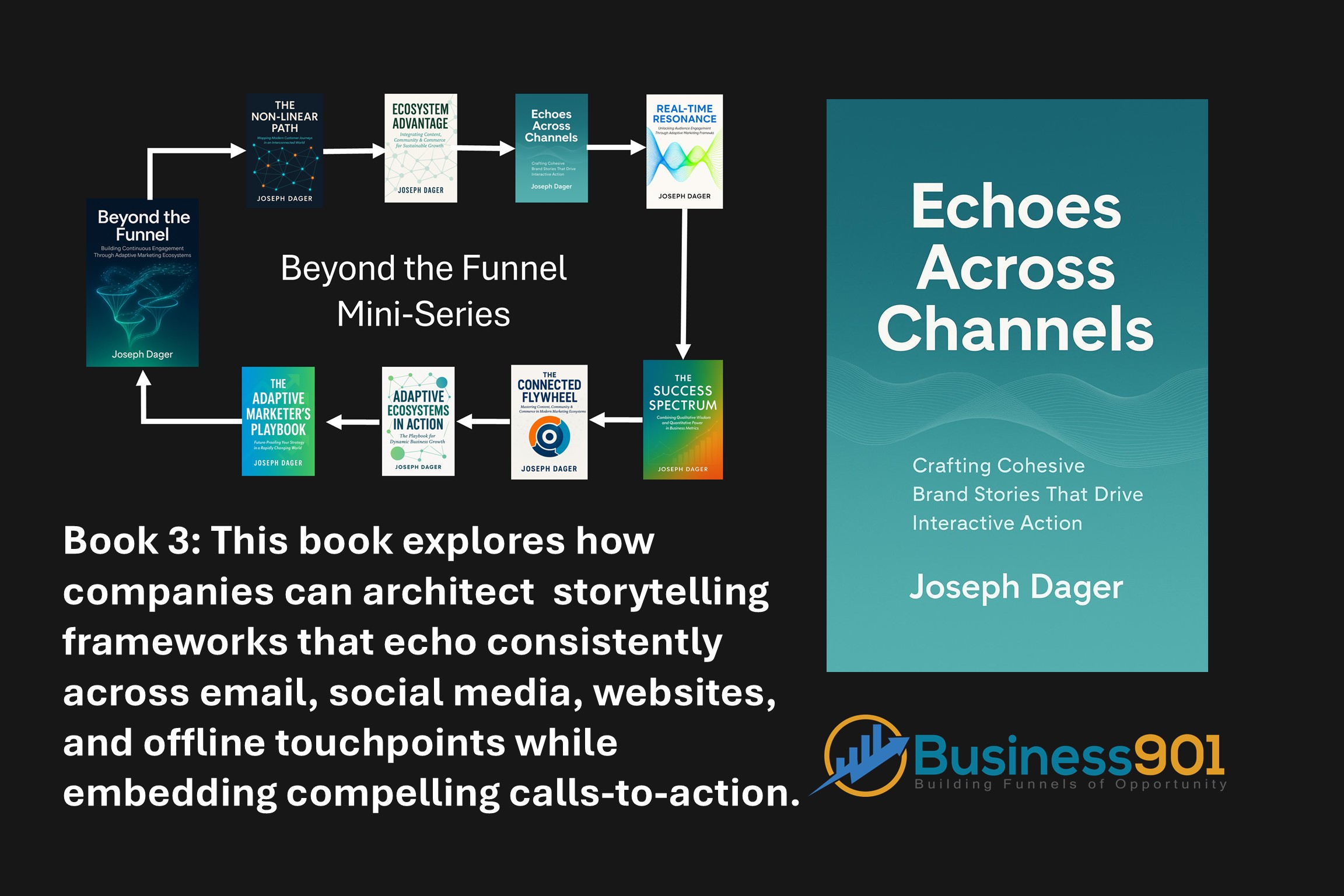
Echoes Across Channels: Crafting Cohesive Brand Stories That Drive Interactive Action
Defining the Problem and Argument Scope
Recognize and Define the Problem
The shift from traditional, linear sales funnels to modern, adaptive marketing ecosystems, as foundationalized in Beyond the Funnel (BtF), has created a critical challenge: fragmented and inconsistent brand communication across an ever-expanding array of digital and physical channels. While the macro-strategy of blending content, community, and commerce is established in the core text, marketers lack a detailed, actionable framework for ensuring the brand’s narrative remains cohesive and purposeful at every customer touchpoint. The problem addressed by Echoes Across Channels (EAC) is the need to unify brand storytelling to drive interactive action in a multi-channel, non-linear environment.
The Process for Solving the Problem
This literature review argues that Echoes Across Channels provides the essential operational and strategic toolkit for executing the multi-channel engagement principles introduced in the overarching Beyond the Funnel framework. It serves as a necessary bridge, converting the conceptual adaptive ecosystem into an executable communication plan. The analysis supports the conclusion that EAC’s focus on unified narratives and personalized calls to action (CTAs) is indispensable for achieving sustained customer engagement and driving measurable business impact within the Adaptive Growth Process.
Survey and Critique of Literature
Contextualizing Echoes Across Channels
Echoes Across Channels (EAC) is the third book in the Beyond the Funnel Mini-Series, which acts as the strategic and educational backbone for the Business901 Adaptive Growth Process. It directly expands upon the foundational concept of Multi-Channel Engagement (Chapter 3 of Beyond the Funnel). This structure positions EAC not as a standalone text, but as a deep-dive implementation guide for one of the three core pillars of the adaptive marketing ecosystem established by the main book (Beyond the Funnel). The mini-series outline further confirms that EAC is a key tool in Phase 2: Implementation and Optimization of the Adaptive Growth Process, underscoring its practical, execution-focused nature.
Discover the Evidence and Build Findings
EAC focuses intently on dismantling the myth that multi-channel storytelling means replicating the same message everywhere. Its central findings revolve around a four-part framework for achieving true narrative cohesion:
- Understanding Multi-Channel Storytelling (Chapter 1): The text emphasizes the importance of cohesive brand narratives across platforms while stressing the need to distinguish and respect the unique characteristics, audience behaviors, and engagement habits of channels like email, social media, and websites. EAC establishes that fragmented communications lead to confusion and missed opportunities, especially for B2B brands with complex offerings.
- Crafting Unified Brand Narratives (Chapter 2): EAC presents the core finding that a unified narrative requires balancing consistency (the core brand voice and values) with customization (adapting the message to fit channel-specific nuances). This requires framing core themes as “modular story elements” that maintain thematic unity while allowing for platform-specific expression, thus fostering authentic engagement.
- Integrating Interactive Elements and Personalized CTAs (Chapter 3): A crucial finding is the need to transform passive interest into active engagement. EAC advocates leveraging interactive tools (quizzes, configurators) and designing personalized calls to action (CTAs) that align with the prospect’s stage in the buyer journey and the platform context. This is essential for manufacturing and B2B marketers dealing with complex products, as personalized CTAs move beyond generic “Contact Us” to meaningful, context-aware invitations.
- Architecting Seamless Customer Journeys (Chapter 4): The book details how to map customer touchpoints to create fluid transitions between channels, orchestrating “storytelling arcs” that guide prospects purposefully. This finding highlights the necessary collaboration between marketing and sales to ensure messaging consistency and eliminate internal silos that disrupt the customer’s journey.
Conclusions
The primary contribution of Echoes Across Channels is its critical role in translating the high-level theory of adaptive marketing (BtF) into practical, operationalized storytelling frameworks. While Beyond the Funnel: Building Continuous Engagement through Adaptive Marketing Ecosystems introduces the concept of an integrated content, community, and commerce framework, EAC provides the specific communication discipline necessary to make that integration effective.
By focusing on the orchestration of cohesive brand stories and the alignment of CTAs with buyer behavior, EAC provides the methodological answer to how a brand’s message is maintained and amplified across a non-linear customer path. Without the tools provided in EAC, the adaptive ecosystem risks becoming just as fragmented as the traditional funnels it seeks to replace. Therefore, EAC is deemed indispensable as an implementation guide for marketers committed to the BtF philosophy.
Summary
Communicate and Evaluate the Conclusions
Echoes Across Channels successfully addresses the strategic gap between conceptual adaptive marketing and real-world execution. It provides a robust, six-chapter framework for crafting unified narratives that not only respect the unique demands of platforms but actively leverage them to drive interactive action. As a core component of the Beyond the Funnel mini-series and Phase 2 of the Adaptive Growth Process, this text provides the operational guidance needed to ensure brand stories resonate consistently, transforming passive audiences into engaged participants throughout the complex customer journey.