
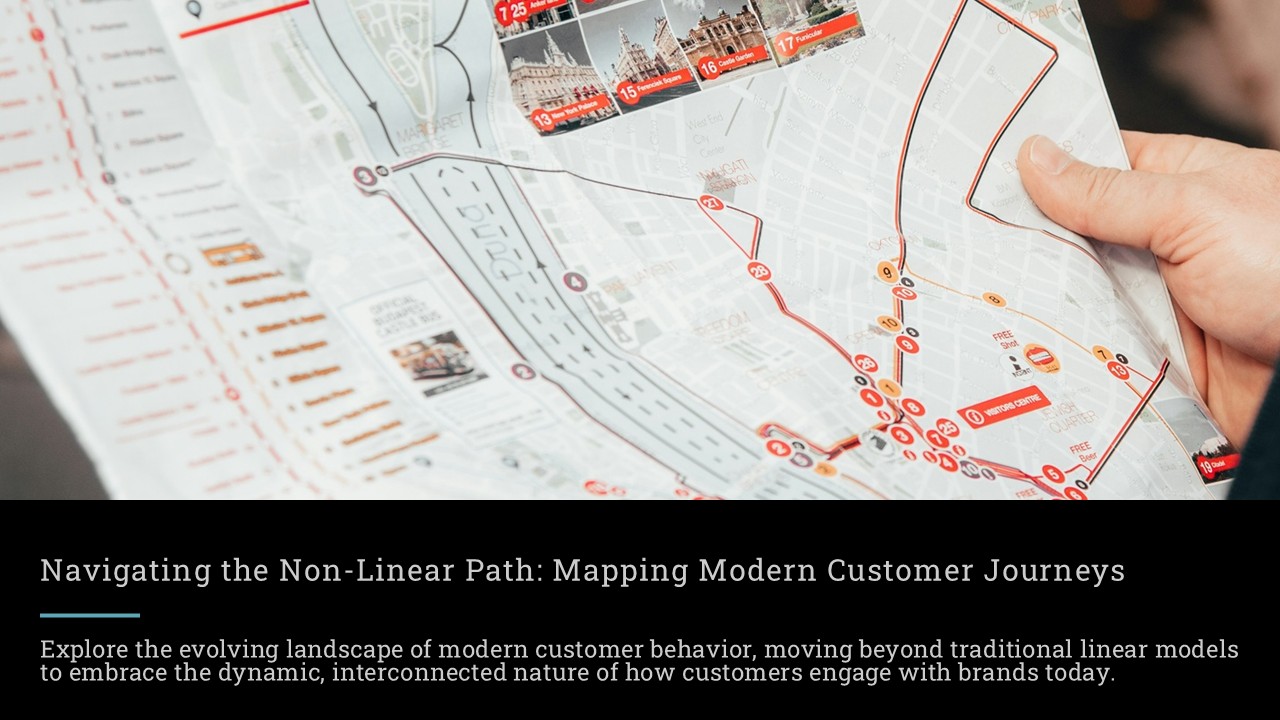
The Non-Linear Path: Mapping Modern Customer Journeys in an Interconnected World
The research addresses the critical practical problem of the obsolescence of traditional, linear funnels in modern marketing. The topic statement is precisely defined as Mapping Modern Customer Journeys in an Interconnected World. The recognized problem is that the customer’s path to purchase is no longer a straight line, but rather a complex web where customers move fluidly across devices and channels, often skipping steps and looping back. These non-linear behaviors challenged established attribution models and required a fundamental shift in perspective.
The core argument establishes the necessity of moving beyond simplistic linear models toward a holistic, adaptive approach. The foundational evidence for this shift is drawn from the author’s previous work,
“Beyond the Funnel: Rethinking Customer Engagement, Chapter 1” critiques the traditional linear sales funnel and advocates for an adaptive, interconnected ecosystem approach to continuous engagement.
The Non-Linear Path offers a practical and detailed methodology for executing this strategic vision.
The literature collected for the book focuses on data that demonstrates the inadequacy of single-touch metrics and the need for multi-point tracking:
- Impact of Interactions: The recognition that modern purchasing decisions are shaped by numerous interactions across channels and devices over extended periods.
- Attribution Distortion: Evidence that single-touch attribution fails to capture true influence by assigning credit for a conversion to only one interaction, thereby distorting marketing priorities and undervaluing channels that nurture interest.
- Cross-Device Behavior: The problem of marketers missing how customers frequently switch devices—from smartphones during commutes to desktops at work—which traditional models treat as isolated events rather than a continuous narrative.
The survey assembles evidence to form a set of defensible findings about the current state of knowledge and the required strategic evolution:
- Complexity is the Norm: Customer journeys are best viewed as a sprawling maze with multiple entrances, winding corridors, and unexpected dead ends, defying linear assumptions.
- Multi-Touch is Essential: To manage this complexity, the book advocates for advanced multi-touch and algorithmic attribution models that capture the cumulative impact of every interaction, contrasting them with simpler models like time decay and position-based attribution.
- Data Unification is the Foundation: A holistic view requires breaking down traditional data silos and implementing identity resolution techniques to link anonymous device IDs with known customer profiles, thereby merging offline and online information into cohesive profiles.
- Proactive Influence is Key: The strategy must move toward leveraging predictive analytics to anticipate customer needs, identify “micro-moments” of influence, and time personalized engagement precisely across channels.
The critique interprets the findings to draw robust conclusions that support the thesis for implementing a holistic measurement strategy:
- Required Evolution: Marketers must move confidently beyond simplistic funnel metrics toward nuanced strategies that unlock a sustainable competitive advantage.
- Strategic Imperative: Implementing a holistic marketing measurement strategy demands building cross-functional teams (including marketing, sales, IT, and domain experts) to interpret multifaceted data, foster collaboration, and ensure that advanced attribution insights are fully aligned with overarching business goals.
- Goal: The ultimate objective is to transform complexity from a challenge into an asset, empowering businesses to orchestrate impactful customer experiences and drive growth grounded in genuine customer understanding.
This analysis applies the systematic process outlined in Machi, Lawrence A., and McEvory, Brenda T., The Literature Review: Six Steps to Success, 3rd Edition, Corwin – A Sage Company, 2018, to construct a credible literature review for the book, The Non-Linear Path: Mapping Modern Customer Journeys in an Interconnected World.