Archive for Lean Six Sigma

Jun
02

Lean Service Design Workbook

Posted by: | Comments (0)

Don’t try to refine your ideas to soon. You want just enough detail to move to the next step. You may even want to use independent teams with different focus points such as one with a functional slant and another with a social slant. One that aims at self-service while another without technology. Conflict and debate are encouraged and trade-offs and compromise should be continuous in this process. Ultimately, only the customer can decide. Ron Masticelli says it very well in his book, Building a Project-Driven Enterprise;

  1. An iterative feedback process between the product design team and the customer(s) or market(s).
  2. Use of real, tangible models, simulations, prototypes, strawmen, etc., that can evoke gut-level customer reactions, capture tacit desires, and evolve as new learning takes place.
  3. Involvement of the CEO and executive team in reviewing the new-product business case, and fully committing the organization’s resources to a successful development effort.

I hope that you design your own workbook and visual management boards. Making this process your own is how the work is enabled. Most people take a course and download the software or the workbook and try to apply without going through the necessary steps to learn the process. I hope that you have started your experiment, your PDCA cycle in adding these thoughts to your toolbox and the way you do your work.

Lean Service Design Workbook.

LSDT EDCA 2 Workbook from Business901

The video is a little fuzzy, this is the slide deck that was used.

Lean Service Design Workbook from Business901

This course is my experiment. Your feedback is important and I would appreciate your comments and suggestions. Please contact me through his website or drop me an email at jtdager@business901.com. If you would like to have a copy of the worksheets in, please download the Lean Service Design Workbook.

This is a PDF Version of a Working Copy Lean Service Design Workbook

This is an excerpt from the Lean Service Design Program

Comments (0)
Jun
01

EDCA for Lean Service Design

Posted by: | Comments (0)

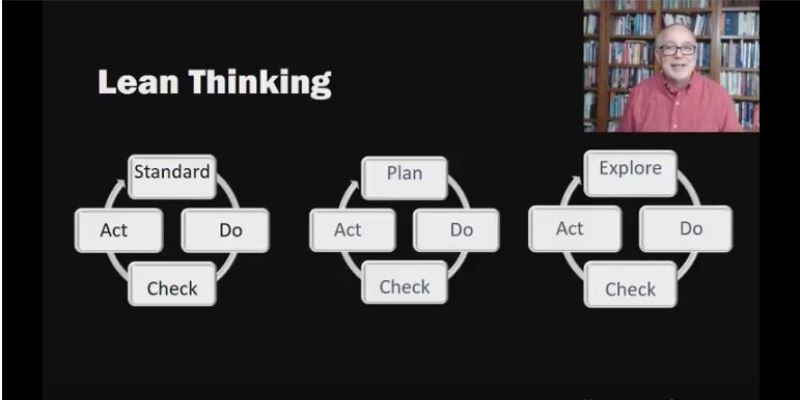
As you start in EDCA, remember that the User/Customer is at the center of your universe. You have to continue improving and earning the right to remain within their sphere of influence. Most of us design services around how we think, not how the customer thinks. We have this idea that we know what is right. What I can tell you is that you are probably wrong. Move away from thinking that you are the “expert” or the smartest person in the room. Instead move towards the thinking that the “room is the smartest person.” In the EDCA  outline that follows take the time to invest in learning from and with your customer. Invest in an excellent customer service experience.

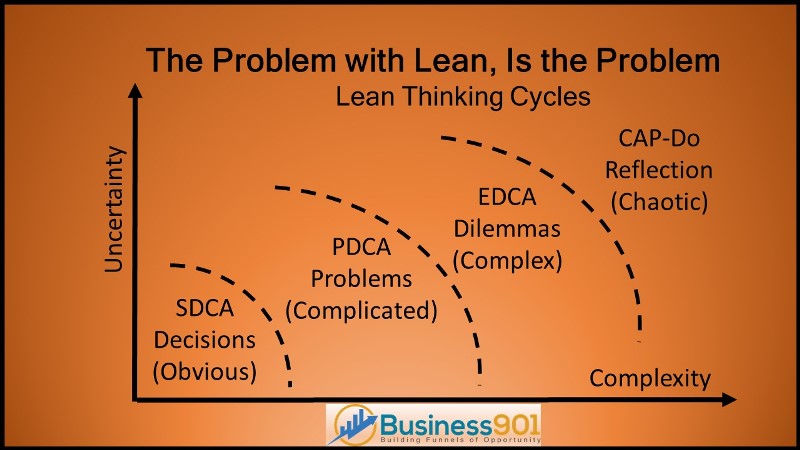
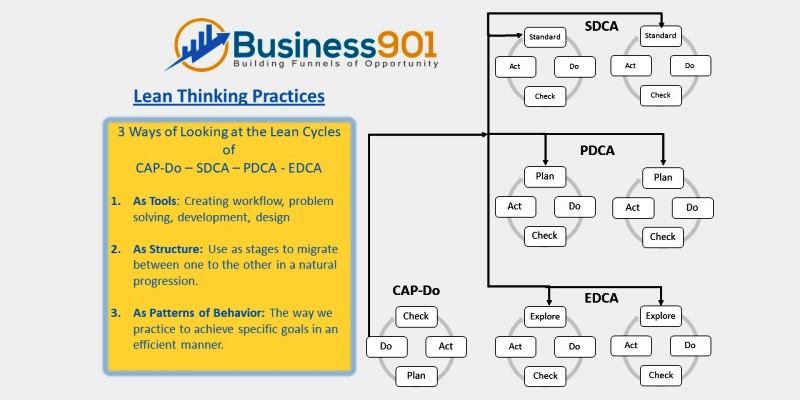
EDCA is a term I learned from @GrahamHill which means Explore-Do-Check-Act.

LSDT EDCA 1 from Business901

  The video may be a little fuzzy, this is the slide deck that was used.

EDCA for Lean Service Design from Business901

Developing regular discussion around the visual management board is one of the most important processes in the creative process. It is the easiest way to build a collaborative structure. Most creative types do not like to hear this, but it is the foundation of Leader Standard Work; visualization and joint responsibility. As we develop more complexity and drive down decision making to the customer facing areas this structure provides the clarity and feedback for even the inexperienced service provider. The Standard Work of EDCA will generate more creative solutions versus hindering them.

  • It will save time on documentation and reporting.
  • People are actually more creative when they have a framework to start with.
  • Teamwork is part of the process from the beginning, and teams are always more creative (and effective) than the individual.

This is an excerpt from the Lean Service Design Program

Comments (0)
May
31

PDCA for Lean Service Design

Posted by: | Comments (0)

The Deming Cycle or The Plan-Do-Check-Act (PDCA) model is a proven framework for implementing continuous quality improvement. It originated in the 1920s with Walter A. Shewhart. These four steps provide the framework for continuous improvement. The PDCA cycle basically starts with a plan and ends with an action in accordance with the information learned during the process. In later years Dr. Deming actually changed the Check portion to the term Study to highlight the creation and validation of new knowledge during that portion of the cycle.


LSDT PDCA from Business901


The video may be a little fuzzy, this is the slide deck that was used.

PDCA for Lean Service Design from Business901

A fundamental principle of the scientific method and PDCA is iteration. Once a hypothesis is confirmed (or negated), executing the cycle again will extend the knowledge further. Repeating the PDCA cycle can bring us closer to the goal, usually a perfect operation and output.

Detailed long-term planning cannot meet the rapid changes occurring in the market place and is falling out of favor. Rapid cycles found in Agile software development are becoming more common. The reason is that most successful sales cycles meet market needs by having a high degree of flexibility and the ability to adjust their plans as needed. So, with iterative cycles the rage, is there any need for a planning stage?

This is an excerpt from the Lean Service Design Program

Comments (0)
May
30

SDCA for Lean Service Design

Posted by: | Comments (0)

A perspective on Standard Work from Steve Bell (Steve and his partner Mike Orzen later published Lean IT: Enabling and Sustaining Your Lean Transformation):

But when you get right down to it the principles of Lean are the same. It’s about collaborative learning. It’s about speed. It’s about quality. It’s about waste reduction. Those basic principles are the same.

What he has concluded and what I have concluded is you need to create a framework for the people who are actually doing the work to come together, figure out what the work is to be done. Where’s the value? Where’s the waste? And iteratively, through experiments, find ways to do it better and better. Each time you learn. You go through a cycle of learning. You improve the process and at the same time you understand more about the subtleties about the process and that’s where the paradox of Lean emerges. As you’re standardizing something you’re also gaining insights into it which leads to creativity and innovation.

Many people react to standard work thinking that you’re just turning people into robots. What you’re actually doing is you’re helping people, removing the drudgery and the repetitiveness from the work, making the work flow more smoothly and quickly, which frees up peoples valuable time and energy to figure out ways to do the work better and to do new kinds of work.

I think that’s the real magic of Lean whether it’s in IT or any other industry. When you see a team really get it and start to think and act like a team with a focus on the customer and they own the product, they own the process, they own their relationship with the customer, then the role of management isn’t so much a directive role or a controlling role but the role of management is to help remove the obstacles in the teams way. That’s when you have high performance, self directing teams that really start to energize the company. When that happens that’s where the momentum comes from.


LSDT SDCA from Business901

 The video may be a little fuzzy, this is the slide deck that was used.

Lean Service Design SDCA from Business901

This is an excerpt from the Lean Service Design Program

Comments (0)